Friday, December 12, 2025
Home Blog Page 6

Police arm of Oregon Humane Society challenged after denying public records request tied to horse neglecter Gwenyth Davies

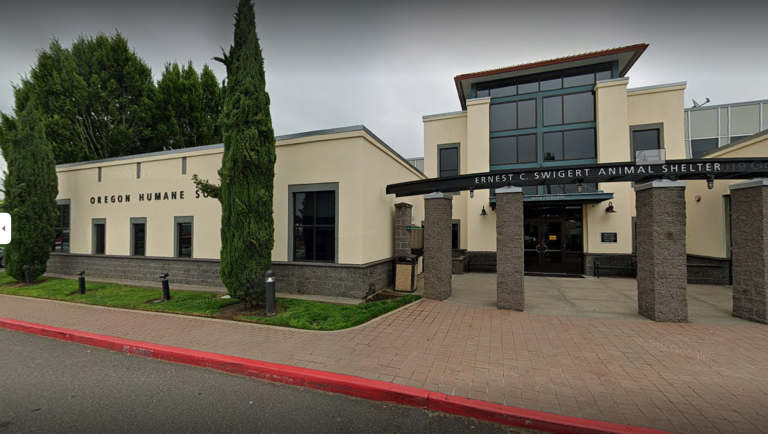
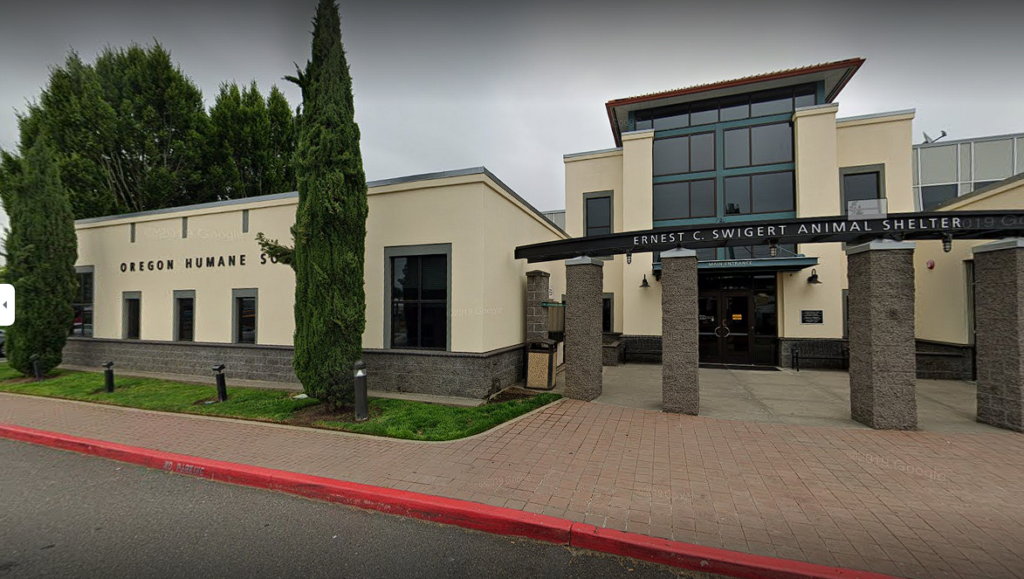
Oregon Humane Society’s Portland Campus (Photo Courtesy: Google Maps)

Portland, Ore. – The Humane Law Enforcement division of the Oregon Humane Society (OHS) recently rejected public records requests submitted by Equestrian Media Group claiming their operations with State-sanctioned police powers are not a “functional equivalent” of a government operation, and thus not subject to public records and transparency.

The denial, which was detailed in a September 29th email by attorney Colin Hunter with Bradley Bernstein Sands LLP, on behalf of OHS, stated in part, “OHS is a private nonprofit; it is neither a public body nor the functional equivalent of one.”

The response is shocking considering that the requested records were directly connected to the operations of OHS’ Humane Law Enforcement division which includes sworn special agents with full police powers within the State of Oregon– powers granted under a special law enacted by the government itself.

Equestrian Media Group has taken swift action by filing an appeal with the Multnomah County District Attorney, the first step in a potential process that could involve legal action. The Multnomah District Attorney’s Office has given OHS until October 9th to submit its response for consideration.

While a ruling is typically required within seven days, Equestrian Media Group did not object to a request providing the District Attorney’s Office until October 16th if necessary to issue an order on the appeal.

In the appeal filed Monday afternoon, this publication argued that OHS’ law enforcement division was clearly a functional equivalent of a government operation. “The claim by OHS that its law enforcement branch is not a ‘functional equivalent’ is beyond infeasible.” the appeal stated.

“The delegation of law enforcement functions, which carry a heavy weight of powers even when wielded by the government directly, is a prime example of the purpose of Oregon Public Records Law when it comes to a determination of functional equivalency and the rights of the people to inspect such records.”

Equestrian Media Group was seeking records related to a case involving Gwenyth Davies, a woman behind a notorious horse neglect case that was widely reported in 2019. Davies, who was convicted in 2020 as part of a plea deal, is currently facing new charges by prosecutors of a probation violation and currently has an active warrant for her arrest.

Officials with the Lane County Sheriff’s Office have also continued to ignore Equestrian Media Group’s requests for comment on their efforts to apprehend Davies. Officials with LCSO have appeared to ignore this publication in recent months after this reporter was illegally detained by a deputy in April, originally stemming from false claims in a 911 call made by Raina Ott, another woman convicted as part of the case involving Davies.

The Oregon Attorney General’s Public Records and Meetings Manual does say that public records law generally does not apply to private entities, but this is not the case when a private body performs a government function.

The operation of a sworn police force that is both licensed by the State’s Department of Public Safety Standards & Training (DPSST) and is provided Statewide police powers, would almost undoubtedly be considered a functional equivalent, if not a posterchild example considering the inherent power provided to police to enforce the laws of the State against private citizens.

“On its face, the Public Records Law does not apply to private entities such as nonprofit corporations and cooperatives. However, if the ostensibly private entity is the ‘functional equivalent’ of a public body, the Public Records Law applies to it.” the manual reads.

Oregonians should be concerned about OHS’ current stance, as on its face it would mean that the State could effectively ignore certain accountability of police by privatizing through not only OHS but potentially other private organizations.

A request for additional comment from a spokesperson for the Oregon Humane Society regarding its stance and Equestrian Media Group’s appeal submitted to the District Attorney has not yet been returned. We will update this story if a response is received in short order.

According to a 2018 story from the Portland Tribune, the OHS law enforcement division came under past scrutiny over allegations of evidence mishandling and other issues, leading to the temporary suspension of the group’s state-sanctioned police powers by the superintendent of the Oregon State Police. A former OHS officer alleged “unethical and unlawful practices.”

Despite the officer’s resignation, she stated, “I still believe in the mission of the OHS organization.”

While Equestrian Media Group had not previously submitted any formal records requests, the group spokesperson Laura Klink has generally been responsive to inquiries in recent years by this publication when seeking information related to several stories covering horse neglect that have involved OHS.

This publication hopes the OHS will promptly reverse course after evaluating the clearly established law and precedence, along with consideration of the public interests of its donors and citizens in transparency and accountability. The people of Oregon have clearly entrusted OHS with the operation of a state-sanctioned law enforcement agency, along with ample support for its charitable operations with a long history of helping animals in Oregon.

Public records issues with OHS are part of the wider ongoing issues faced by journalists in Oregon

While Equestrian Media Group has had a generally excellent history when working with Oregon’s State-level agencies on public records requests, we have faced significant roadblocks when seeking records from local government bodies within the State– especially when compared to efforts in other states.

The roadblocks have included failures to meet required timelines and provide required policies on how the bodies even calculated fees, providing exorbitant fee demands, or citing exemptions in the law without any articulation despite the burden of claimed exemptions being on the public body.

Late last year for example included an inherent denial of a request made by Equestrian Media Group due to exorbitant fees demanded by Lane County Animal Services in seeking numerous email records and filed horse welfare complaints, despite the limited number of keyword searches. The total estimate– over $22,000.

County officials appeared to apply what this publication viewed as an unreasonable time calculation by IT officials to search what it was were “archived” emails, explaining that each keyword search, per inbox, per month, for each of the requested years, would be required. This method of calculation quickly added up.

Another recent example included the Oregon State Fair Council initially demanding $600 from Equestrian Media Group to produce a single hour of phone call logs, claiming an arbitrary rate of $75 per hour and 8 hours of work. OSFC later changed this estimate to 3 hours when challenged, and later said they would provide the records for free after Equestrian Media Group uncovered the quasi-government body, a state public corporation, failed to have a public records policy pursuant to Oregon law.

After OSFC involved an attorney after Equestrian Media Group double downed, OSFC took several more weeks to produce the records with dubious claims the delays were due to their phone system provider Comcast having removed the simple tool allowing them to generate and download the report, despite the tool being clearly documented even on Comcast’s support page.

Reporters Committee For Freedom Of The Press detailed in a November 2020 article that Oregon’s excessive public records fees were deterring investigative reporting.

“This scenario is far from unique. Journalists and news organizations across the country frequently struggle with the high costs of public records when reporting investigative stories. But these high costs are especially burdensome for journalists and other requesters in Oregon — so much so that the excessive fees were cited in a 2019 report by the former Oregon Public Records Advocate as ‘perhaps the single most pressing issue related to public records requests in the state.’ ” the article read.

If you’d like to help Equestrian Media Group as we continue to fight this or other battles related to public records which we strive to obtain for our readers please visit this link: https://nwhorsereport.com/donations/records-legal-support-fund/

We thank you for supporting small local & niche journalism.
Oregon veterinarian with domestic violence conviction takes deal in animal neglect case

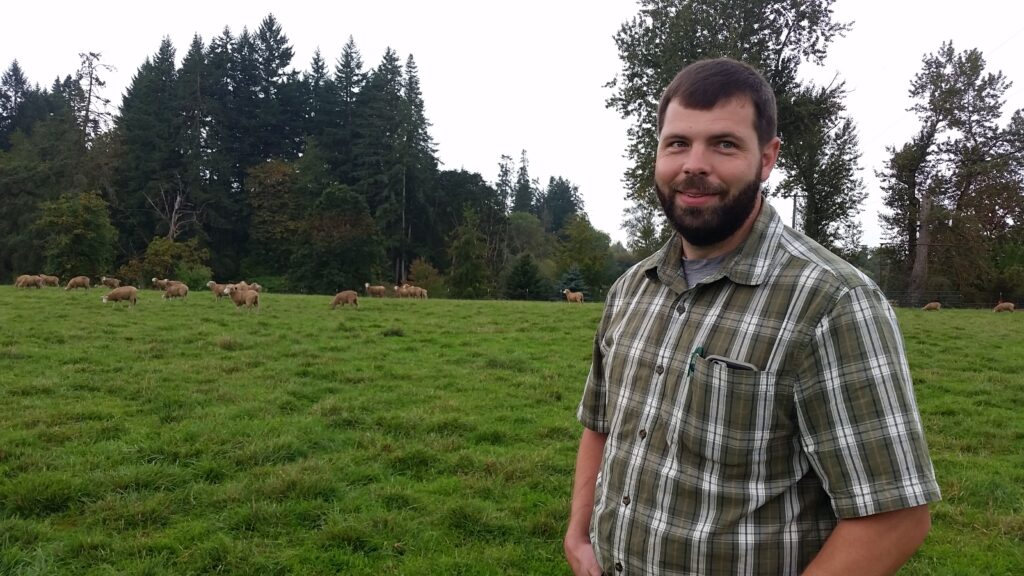
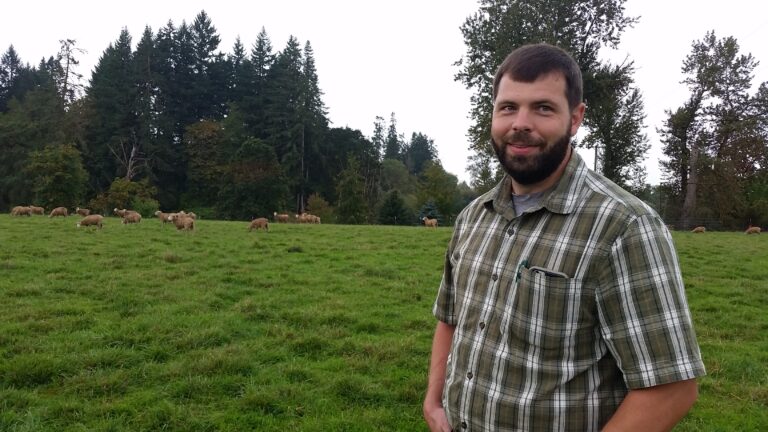
A 2015 photo of veterinarian Brian Dietrich, then of Silverton, Ore., with some of his sheep.

Scio, Ore. – An Oregon veterinarian will be allowed to continue his practice while on probation after accepting a plea deal in an animal neglect case involving a herd of sheep confined in unsanitary conditions.

Brian James Dietrich, 43, owner of Scio Animal Clinic, pleaded no contest Sept. 20th in Linn County Circuit Court to three counts of second-degree animal neglect and received five years of probation.

As part of the plea agreement, prosecutors dropped 27 counts of felony second-degree animal neglect, each count punishable by up to five years in prison.

As a condition of probation, Deitrich was required to report to the Linn County Jail by Sept. 29 to serve 48 hours in jail, with credit for time served. He must also serve 10 days on a county work crew.  

Additionally, he was required to surrender 25 live sheep seized by Linn County and reimburse the county $3,134 for the animals’ care.

Dietrich also received an extension of a previous probation sentence related to a 2021 domestic violence incident when he choked out a woman in front of a minor child. He pleaded guilty in 2022 in Linn County to felony strangulation and received 30 days in jail and three years of probation, which was extended to five years of probation as a result of his recent conviction.

While on probation for the neglect case, Dietrich may continue working as a veterinarian but otherwise may not have pets or livestock in his care except for a dog, two cats, one horse and two mules already in his possession. His practice offers services for both small and large animals including horses.

According to records published by the Oregon Veterinary Medical Examining Board, Dietrich’s license to practice veterinary medicine remains active. A board representative said they could not confirm whether or not Dietrich’s license is under official scrutiny as a result of the sheep neglect because any such investigation would be confidential.

The board has penalized Deitrich twice in the past for minor license violations. In 2017 he was fined $250 for prescribing antidepressants to a human through his veterinary license, and in 2018 was fined $250 for providing care to a dog without keeping a complete patient record.

Prior to owning Scio Animal Clinic, Dietrich was the owner of Abiqua Animal Clinic in his native Silverton from 2009 to 2016.

He is also the first vice president of the Oregon Sheep Growers Association, which did not respond to a request for comment. An unnamed receptionist with the association confirmed to Equestrian Media Group shortly before publication that their website page listing Deitrich in that position was still current.

Dietrich was arrested July 11th for keeping a herd of 27 sheep in unsanitary and cramped conditions, resulting in the deaths of two of the animals and injuries to multiple others.

The Linn County Sheriff’s Office discovered the sheep on June 12th at a farm on the 40000 block of Rodgers Mountain Loop, near Scio, after acting on a tip. The only water available to the animals was contaminated with bugs and algae, while some sheep had sores on their hooves or chests due to cramped confinement and had difficulty walking.

When charges were filed in Linn County Circuit Court, prosecutors declared their intent to seek an enhanced sentence, claiming the neglect constituted “a violation of public trust or professional responsibility.”

Dietrich initially denied wrongdoing and argued any injuries to the animals were in keeping with accepted veterinary and farming practices, but did not detail which specific practices were allegedly employed. Oregon law allows injuries to animals in the context of practices like hunting, farming, animal testing, and veterinary medicine.

These regulations have been criticized by animal rights groups as legalized animal cruelty, and they are pursuing a 2024 ballot measure that would remove all exemptions except for veterinary procedures and self-defense.

When Dietrich entered his plea deal, he did not formally admit guilt. A sentencing memorandum by defense attorney Geordie Duckler said Dietrich accepts “legal and moral responsibility for what he did.”

Prosecutors were also prepared to seek a blanket prohibition against caring for animals while Dietrich was on probation, a restriction which had been imposed while the case was pending. Duckler argued this would be oppressive given Dietrich’s profession and, if the court were to impose such a restriction, it should apply to sheep only as this was the type of animal at the center of the allegations.

Judge Brendan Kane approved a compromise position on this issue, as detailed above.

A staff member with the Scio Animal Clinic declined to comment to Equestrian Media Group. “We’re not going to make any comment,” before promptly hanging up.


An earlier and shorter version of this story first appeared in The Canyon Weekly by the author.

Equestrians raise issues with park district on trail safety, grabbing the attention of Ms. Oregon

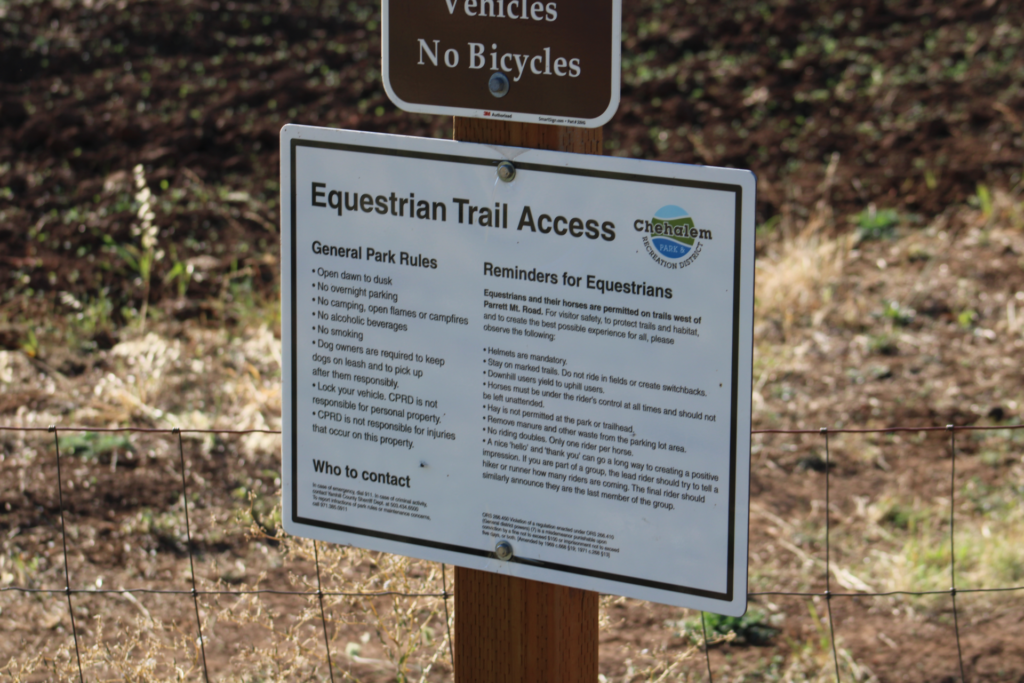
A sign outlining equestrian access on the west side of the Bob & Crystal Rilee Park east of Newberg, Oregon. (Photo Credit: Equestrian Media Group)

Newberg, Ore. – A growing group of equestrians in northwest Oregon are calling attention to what they say are serious safety concerns involving one of the only designated park equestrian trails open to horses in Yamhill County.

The park, known as the Bob & Crystal Rilee Park & Farmhouse, was a 400+ acre property donated by a trust to the Chealem Parks & Recreation Division (CPRD).

The increasing attention from equestrians has also brought light to the discovery that a now-former director and other officials had allegedly misused district assets through free use of the district’s golf course, as well as friends and family. The now former elected board member, Don Loving, is also a current and registered lobbyist in the State of Oregon.

The discovery– which led to a preliminary investigation by the Oregon Government Ethics Commission (OGEC)– contributed to Loving’s ouster in a recent election just months ago.

Loving, along with district superintendent Don Clements, have also faced numerous allegations by equestrian advocates of engaging in what they said was unfair treatment of those sharing their viewpoints, including during public meetings.

He said the allegations of unfair treatment were simply due to his differing views and support of allowing bikers to have half of the Bob & Crystal Rilee Park. He also denied to Equestrian Media Group that he ever allowed anyone other than himself to get free rounds of golf.

The timing of the OGEC was “a politically motivated attack,” said Loving.

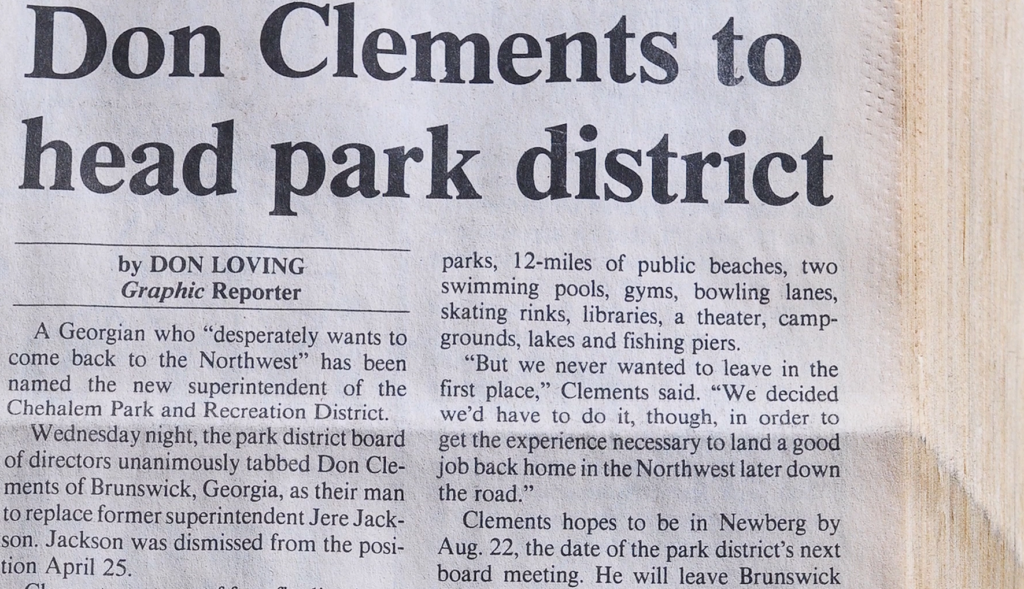
Clements has been the unelected head of CPRD for a record 38 years. In 2017, after 32 years as the head of the park district, Clements was awarded for professional achievement by the Oregon Recreation & Park Association. Loving was also a former reporter for the Newberg Graphic who wrote the story announcing Clements’ appointment to lead CPRD back in the 1980’s.

A still image from a CPRD video showing the headline of an article from the 1980’s by Don Loving who was previously a reporter for the Newberg Graphic.

Loving himself later became a long-serving board member who was first elected in 1991, serving over 3 decades until he lost reelection after coming in last during a recent special election, receiving only 14.96% of the vote between five people running for two board seats.

Two of the newly elected board members, Matthew Smith and Jason Fields, received 22.16% and 23.95% of the vote respectively in a Yamhill County Special District Election on May 16th.

The ethics complaint involving Loving stems from his self-admitted use of the district golf course for free, a benefit discovered to be available to public officials at CPRD, despite there being no formal benefits package or policy. The allegations were first brought to light by Hunter Wylie who filed a report with the OGEC and then announced his findings during a CPRD public meeting.

Wylie is also part of the Pickleball Advisory Committee for CPRD itself, but doesn’t have a direct personal interest in the dispute between equestrians and biking groups at the Bob & Crystal Rilee Park.

An attorney for CPRD later maintained that Loving’s free use of the golf course was not illegal. An investigator later recommended a formal investigation to the OGEC which was discussed during an executive session on July 14th. The commissioners ultimately voted 5-3 against a motion to pursue further investigation against Loving individually.

Some citizens have called on Loving to pay back part of the free golf he obtained for friends and family, along with himself. According to Wylie, records over the course of 33 months allegedly showed Loving obtained approximately $5,000 in personal benefit, but the records didn’t cover the many years Loving allegedly enjoyed free golf. Loving also maintained that friends or family paid a special guest rate.

According to the CPRD website, “[Loving] was also a driving force behind the creation of the Chehalem Glenn Golf Course.”

The OGEC records indicated that while Loving reported there was a CPRD policy to an investigator allowing the use of facilities for free, no actual policy was ultimately found. The OGEC details revealed that a benefit package could be established by the district for its future board members and employees, or by being put to local voters to decide if they want to grant such benefits for free or reduced costs.

OGEC Commissioners also pointed out that other officials had enjoyed the same benefits as Loving. Due to the potential scale of involved persons, OGEC dismissed the recommended action of a more detailed investigation into Loving individually, while appearing to signal that the district needed to make corrections.

Many locals had said it was long overdue and have been calling for much-needed changes in leadership, a feeling that was shared even by some who felt great things had been accomplished by the work of officials and board members like Clements and Loving.

The Bob & Crystal Rilee Park was gifted out of trust almost a decade ago. According to many familiar with the donation and the Rilee family themselves, along with corroborating public records with CPRD; the donation and use of trails were primarily intended for hikers, equestrians, and agriculture use and education. While not obligated by law, the records appear to make it clear that CPRD intended to honor its commitment and make new investments that supported that use.

Proponents say the treatment of the park has been opposite on contrary to those promises and feel that if CPRD continues to stray from past promises, it would seriously jeopardize the district’s integrity and likely make other generous donors question potential donations and support for CPRD, if not other special park districts generally.

During the pandemic, the park started to become a hotspot for bikes, which promptly led to safety issues in the park. Past debate ultimately led to CPRD splitting usage of the park which was conveniently divided in half by NE Parrett Mountain Rd. The west side was designated for equestrians, while the east side was designated for bikers. Hikers are permitted on both sides.

Despite this effort, equestrian proponents have continued to highlight issues and present evidence that many bikers have continued to violate the park rules while riding on the west side, presenting many safety challenges.

They claim the majority of the trails are not suitable for mixed-use that is used in other public places, as the steep terrain and undergrowth often lead to horses and bikers running into each other without warning.

Proponents on the respective sides of equestrians and bikers, as well as others in the middle, have been actively proposing several differing solutions. Several sources also said CPRD has ignored the ongoing violations and provided zero enforcement of the park rules.

Ryann Reinhofer, a local resident whose property is adjacent to the park, spoke to Equestrian Media Group about the ongoing issues and how she started getting involved a year ago. Reinhofer’s early efforts involved preparing a presentation in September 2022 before the CPRD Board, bringing attention to the continued issues of safety and violations by bikers.

Reinhofer is also the principal broker for Thoroughbred Real Estate Group. Equestrian Media Group went out recently with Reinhofer on horseback to see first-hand the dangers that she and others have continued to call attention to.

During that ride, clear evidence of bike tracks was seen on the trails, despite bikes indeed being banned. Vehicles with empty bike racks were also seen in parking lots on the park’s west side. The other potential dangers claimed by Reinhofer and other equestrian proponents were clearly evident after entering the forested trails.

“This is a disaster waiting to happen, and the equestrians familiar with the park and issues know this is a ticking time bomb where somebody’s going to get seriously hurt or killed,” said Reinhofer.

“You’re getting to see now, these trails on this side are in steep terrain, they’re narrow, with ravines and switchbacks, and blind corners with the thick brush. It isn’t like most other open and well-maintained places where mixed-use with those on bikes works, and these kids on bikes are also at risk of getting hurt if they come flying around a corner straight into a horse,” said Reinhofer.

Ryann Reinhofer as she leads her horses out to a paddock after showing the Bob & Crystal Rilee Park equestrian trails in mid-September, 2023. (Photo Credit: Equestrian Media Group)

The same day Equestrian Media Group spoke to Brian Bowman who was one of the leaders of the local National Interscholastic Cycling Association (NICA) group that he said was based in Lake Oswego

The group happened to be holding their weekly ride with many of their youth of middle and high school age on the east side of the park, which is currently open to bikers. Bowman said he didn’t think there was much of an issue, and also said he had not heard of many incidents of bikers actually riding on the west side.

We explained our findings of fresh bike tracks just that day to Bowman, as well as numerous equestrians explaining they frequently would see kids riding on the west side, who then said that it was unlikely the bikers were part of their group.

When asked if members of their group could be going on the equestrian trails on different nights of the week, Bowman said he didn’t think so, but said they would speak to their members if they received information that someone affiliated with the group was violating park rules.

Bowman said efforts to bring public attention to Loving’s ethics issues involving the golf course were what he described as a “smear campaign” by equestrian interests, despite the issues having been revealed by Wylie whose interest revolved around pickleball.

One of the allegations of unfair treatment by equestrian proponents included an incident where Superintendant Clements admitted during a public meeting that he provided the biking group permission to hold an impromptu event in the park on both the west and east side for a weekend. The request and permission from Clements happened through a few text message exchanges.

Reinhofer and other equestrians said the biking group didn’t have to go through the normal processes within the district to sanction an event, which called into question the extension of special favors to the group. They also raised concerns about the biking group having obtained any required event insurance that may have been required as part of such a process.

Equestrian proponents also said that when they had requested through normal channels to hold a simple volunteer work party, CPRD went as far as saying that each person would be required to undergo background checks.

The growing attention to the issues being faced by equestrians has led Amber Rosenberry, who is currently Ms. Oregon 2023, to signal her own concerns. She plans to address CPRD officials at a public meeting scheduled for September 28th. Rosenberry, herself an avid equestrian, has also received public attention in her calls for Oregon to improve what she said are lacking anti-stalking laws.

Reinhofer and others have expressed they are hopeful the recent shakeup with the elected CPRD Board will result in more accountability and decisive actions that serve the public and local voters.

A public meeting of the CPRD Board of Directors is scheduled for this Thursday, September 28th at 6pm at its administration office located at 125 S Elliott Rd in Newberg, Oregon. An agenda and the ability to join by webinar is available online. One of the primary discussion topics for the board involves the Bob & Crystal Rilee Park.

Records Requests with CPRD

CPRD has recently denied both fee waiver and fee reduction requests pertaining to public records requests made by Equestrian Media Group. CPRD officials refused to explain their reason for the denial despite our request to raise clear public interest and benefit reasons as outlined under Oregon public records law.

Equestrian Media Group then asked CPRD to both explain the reason for the denial and who actually made the denials, and also pointed out that CPRD’s Public Records Policy doesn’t actually appear to comply with Oregon law by explaining how it actually accesses fees on public records requests.

CPRD’s public spokesperson Kat Ricker ignored the question in a follow-up by again restating the denial, saying in part, “CPRD has considered your request for a waiver or reduction of fees and has decided not to grant a waiver or reduction of fees.”

Ricker, along with Superintendent Clements, have ignored repeated requests for specifics on the justification for the denials and who actually made the decision.

Our requests for free waivers and reductions were based on our belief that the fees were a bit arbitrary and were not made in line with any established policy outlined under ORS 192.324(7)(b) which states, “The amounts of and the manner of calculating fees that the public body charges for responding to requests for public records.”

The policy document provided by CPRD simply stated that “CPRD will review the request and calculate a good faith cost estimate based on the information available,” but did not appear to outline the amounts and manner as required by Oregon law. Officials ignored our inquiries requesting more details when pointing to the statute.

The response also raises serious questions as multiple sources have alleged that CPRD officials have previously provided records when requested through informal channels at their offices.

A second public records request from Equestrian Media Group went on to seek records related specifically to past requests in order to gain a clear understanding of CPRD’s handling of requests and fee waivers. We have also submitted a records request with the Yamhill County District Attorney’s Office seeking records of any submitted appeals related to a fee waiver or actual record denials by CPRD.

Equestrian Media Group now intends to implore the CPRD Board of Directors to intervene in the handling of the requests by CPRD officials. If the Board of Directors does not intervene Equestrian Media Group is likely to appeal to the Yamhill County District Attorney, although we intend to pay some of the fees while we seek appeal in order to avoid delay in obtaining records that may provide further light to ongoing issues.

Note: This story was updated shortly after publication to include details after Don Loving contacted Equestrian Media Group


You can join the discussion on Facebook or X (Twitter). If you’d like to support NW Horse Report’s ongoing efforts and fights related to public records and transparency, you can donate to our Records & Legal Fund by clicking here.

Idaho lottery officials launch investigation into illegal raffle for horses

Chester, Idaho – The Idaho Lottery Enforcement Division is investigating an Idaho equestrian company’s illegal raffles according to an official who spoke to Equestrian Media Group.

The discovery came after Equestrian Media Group received tips in recent days that Weber Family Quarter Horses was holding illegal raffles, prompting our inquiries with Idaho Lottery officials for more info who ultimately confirmed they were investigating.

According to the Idaho Lottery, “only charitable/non-profit organizations can conduct bingo and raffles. All other gaming activities such as poker runs, Calcutta’s and casino nights are strictly prohibited.”

The law is similar across the nation in most states, with for-profits being prohibited from conducting raffles. Even then non-profits must typically meet certain requirements and obtain the necessary permits with the respective State agencies, often including State Department of Justices. Lottery & sweepstakes regulations are also enforced by the Federal Trade Commission.

According to multiple agencies, such laws are intended to protect consumers by preventing the potential for deceptive and unfair business practices involving such raffles which can be plagued with questions of accountability.

The company’s owner, Afton Weber, spoke to Equestrian Media Group last week. When asked about the current raffle for a horse represented as an “AQHA Stud Colt”, Weber generally denied having any awareness that such a raffle was illegal. Equestrian Media Group pointed Weber to resources pointed out by the Idaho Lottery officials regarding the laws, specifically an online FAQ.

“Yeah, so we always list the babies beforehand, but he didn’t sell. Then people asked for people for me to do the raffle because people like him, so that’s why we did the raffle,” said Weber.

She also confirmed they had held raffles in the past. Facebook posts from 2022 also confirmed they held raffles

Weber confirmed that the company was not a charitable organization, but was an unregistered for-profit business. She was also insistent she would be contacting Idaho Lottery officials right away when asked if they intended to continue the raffle.

Despite that claim, according to Charitable Gaming Coordinator Tina Miller with the Idaho Lottery, Weber had yet to reach out. The company has continued to accept new entries and advertise the raffle as recently as yesterday, days after speaking with Equestrian Media Group and saying they would speak to the Idaho Lottery about it.

“I can tell you they do not hold a license,” said Miller, who went on to explain that only certain charitable organizations are able to obtain a license for a raffle.

Miller confirmed they were actively investigating the promoted raffle and would soon be making attempts to reach the company themselves.

While a raffle would clearly be illegal, Miller went on to explain that “merchant drawings” were legal for for-profit businesses, explaining the key differences. “Merchant drawings by for-profit businesses are legal, but there are steps they have to do to make them legal,” Miller said.

“Gaming in the State of Idaho is defined by three things; payment or consideration, a chance, and a prize that is given away. So they either have to remove the payment, so basically, anyone entering the drawing would get a free ticket to get into that drawing or remove,”

Miller confirmed that such merchant drawings are used to support other standard sales activities or business promotions, like offering prize drawings for people liking/subscribing to a social media page, or signing up to a company’s email list, are legal.

“What I’m seeing is a raffle, and because they are a for-profit business they are not allowed to hold a raffle, it’s illegal for them. If they continue in the aspect that they are they could face fines,” said Miller.

According to Miller, the company would need to take action to change the raffle entry requirements to allow entry without payment and would need to offer refunds to those who have already paid.

Another investigator with the Idaho Lottery told Equestrian Media Group last week they were already taking steps to document the advertisements and claims by the company. Equestrian Media Group has previously reported on illegal raffles after receiving tips from readers expressing concerns about consumer protection, but often the advertisements on social media are promptly removed.

Miller also explained that both merchant drawings and raffles require the company or charitable organization to keep detailed records in the event of an audit and investigation. Such record requirements are outlined in Idaho law and must be kept for at least 5 years.

Ticket sales are also prohibited by law from being deposited into personal bank accounts, which would likely include personal banking app accounts like Venmo.

Equestrian Media Group also spoke with officials with the Washington Gaming Commission, as our initial tip appeared to indicate that the raffle was soliciting consumers in that State. An official said that they would be concerned about any Washington consumers getting wrapped up with an illegal raffle, but any action they took would be to support Idaho officials who’d take the lead in any investigation considering the company was located in Chester, Idaho.

Civil fines for violations can range up to $10,000 per violation explained Miller, going on to say that each individual advertisement for a single raffle could be considered a violation. The potential fines for Weber and her company could be extensive.

She also confirmed that an illegal raffle could result in criminal charges. “They can be charged under the gambling laws which are criminal,” said Miller.

Miller said that anyone with questions or concerns regarding this or any other raffles being held or promoted in Idaho to contact the Idaho Lottery Enforcement Division at (208) 334-2277. She also encouraged members of the public or those wanting to learn more about the common requirements to visit: https://www.idaholottery.com/charitable-gaming/faqs

If any consumers who have entered this raffle are not refunded upon request they can contact Idaho Lottery, FTC, BBB, or the Office of the State Attorney General or department of Consumer Affairs of the consumer’s state.

Family mourns after Idaho man and horse killed by semi-truck

Idaho Falls, Idaho – An Idaho horseman and his horse were killed Monday evening after being hit by a semi-truck on Old Butte Highway north of the town of Hamer.

According to the Idaho State Police who are investigating the crash, which occurred on Monday just after 8pm, a 59-year-old male was driving the 1998 Peterbilt semi northbound on the highway when he struck 56-year-old Pedro Puente Nunez and his horse.

The deputy coroner for Jefferson County, Idaho, released the victim’s identity on Tuesday.

According to Idaho State Police, Puente was thrown from his horse after being hit from behind by the semi-truck. He and the horse died from their injuries.

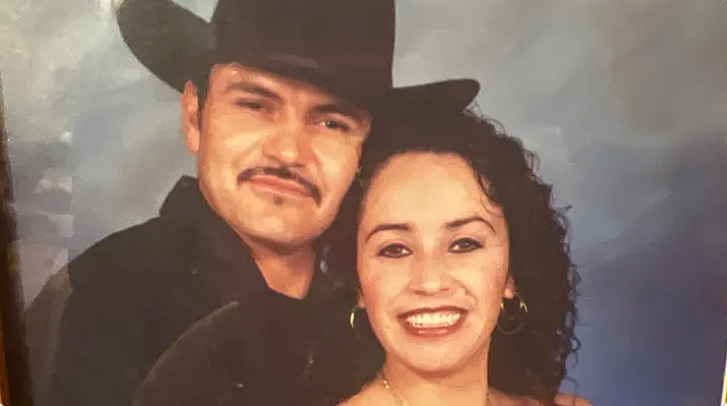
The family has created a GoFundMe page. The victim’s daughter, Jennifer Puente, said on the GoFundMe, “I appreciate and thankful [sic] in advance for anyone sharing or posting this to spread awareness of the passing of my dad. Pedro (Puente) was a bright light to anyone who [knew] him.”

The crash is still under investigation by the Idaho State Police.


DISCLAIMER: Equestrian Media Group cannot assure readers that any support provided for any included appeals for charity will be applied for the benefit of such persons.

Crisis helpline for Oregon’s agricultural and forestry communities is now open

Corvallis, Ore. – The Oregon Agristress Helpline – 833-897-2474 – is available 24 hours a day, seven days a week by call or text. The voice line can be accessed in up to 160 languages with the help of interpreters, and the text line services English, Spanish and Vietnamese.

The AgriStress Helpline is unique because it is completely dedicated to serving Oregon’s agriculture and forestry communities, which includes farmers, farm workers, ranchers, fishermen, foresters and their families. 

In June, the Oregon Legislature passed Senate Bill 955, sponsored by Sen. Bill Hansell, R-Athena, which provided a one-time $300,000 general fund appropriation to the state Higher Education Coordinating Commission to distribute to the Oregon State University Foundation to establish an endowment for Oregon State University Extension Service to implement and operate the helpline in Oregon.

Gov. Tina Kotek signed the bill into law in a ceremony in Prairie City in July, making Oregon the seventh state to link into the AgriStress Helpline. Nationally, OSU is the first academic institution and the first land grant university to partner with a state on the helpline. 

“This is an important milestone in the effort to provide mental health assistance for folks who are vulnerable to suicide,” said Allison Myers, associate dean for Extension and engagement at the OSU College of Health. “I want to express my enormous gratitude for the numerous people and organizations who got behind this and were able to make it a reality.”

A coalition of 27 farm groups and healthcare organizations advocated passage of SB 955. Myers, who also leads the OSU Extension Family and Community Health program, and Todd Nash, a Wallowa County rancher and president of the Oregon Cattlemen’s Association, were instrumental in building support for the helpline.

The issue of mental health for farmers and ranchers has become a “top subject” in rural Oregon, Nash said.

“Suicide is a tough subject,” Nash said. “It’s affecting our communities. It has huge impacts on families.”

According to the National Rural Health Association, the rate of suicide for farmers is 3½ times higher than the national average per capita. Mental Health America, a national nonprofit advocacy organization, placed Oregon nearly at the bottom of its state rankings for a higher prevalence of mental illness and lower rates of access to care.

According to the Oregon Violent Death Reporting System, deaths by suicide in Oregon have been higher than the national average since at least 2001, and they are increasing year over year.

The helpline was established by AgriSafe Network, a nonprofit organization that aims to improve the health and safety of farmers and ranchers through their Total Farmer Health approach. AgriSafe Network is an affiliate of the National Institute for Occupational Safety and Health (NIOSH) and a founding member of the national AgriStress Response Network.

All AgriStress Helpline calls are answered in 30 seconds or less, and all callers are screened for suicidality. Intervention occurs for people at imminent risk. Others are offered relevant resources, tailored to the agriculture community and by state/region. All callers are offered a 24-hour follow-up call, also through the AgriStress Helpline. 

Calls are answered by credentialed suicide/crisis specialists trained in cultural competencies in agricultural mental health and factors affecting mental health, including production and financial issues, injuries, market fluctuations, and family dynamics. Their training meets the standards of the American Association of Suicidology.

AgriStress Helpline staff complete 300 hours of professional development, including an overview of state-specific agricultural contexts and ongoing quarterly training in agricultural stress topics. AgriStress Helpline staff are aware of state- or regional-level agricultural events that may impact call volume, for example, a disaster, community tragedy, or reports of yields that may impact financial well-being.


The Oregon State University Extension Service shares research-based knowledge with people and communities in Oregon’s 36 counties. OSU Extension addresses issues that matter to urban and rural Oregonians. OSU Extension’s partnerships and programs contribute to a healthy, prosperous and sustainable future for Oregon.

Horse auction announces closure amid scrutiny and discovery of auctioneer’s past arrests for horse theft

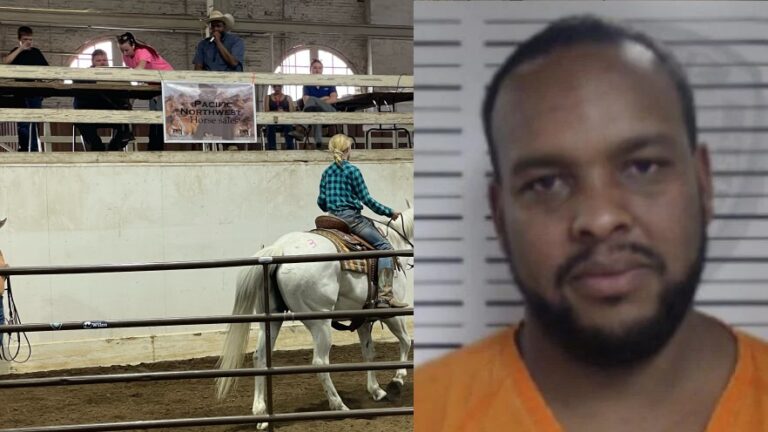
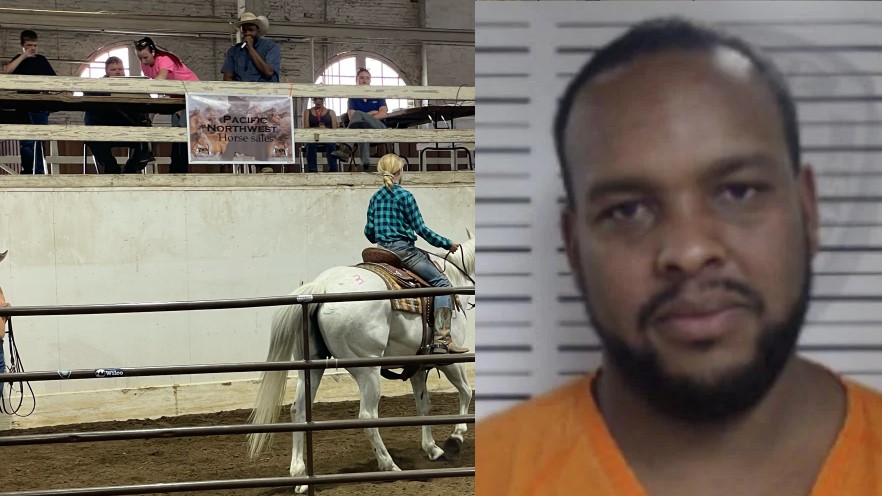
Jonramon Vaughns (aka John Henry) is pictured left while working as an auctioneer for PNW Horse Sales. On the right is a 2018 booking photo from an arrest on multiple warrants on charges in Louisiana of stealing over a dozen horses.

Salem, Ore. – The Oregon horse sale company that had past ties to a woman recently arrested for felony aggravated animal abuse, and facing growing allegations of various unfair trade practices for deceiving buyers, has announced its abrupt closure.

PNW Horse Sales’ announcement on Facebook that it would be ceasing operations made on September 14th also came a day after NW Horse Report started new inquiries into the company’s contracted auctioneer having been previously arrested for a highly reported horse theft scheme in Louisiana.

Allegations from numerous buyers and other people familiar with the auction included the company failing to comply with its own rules and legal requirements on disclosing sellers and sale records, allowing “shill bidding”, and both concealing and then publically lying about the core sellers of horses being involved in the auction company’s operations.

NW Horse Report also obtained public records from a State agency that corroborated the claims that a notorious horse trader and self-described “kill buyer”, Don Nowlin, was involved, despite claims by the company’s listed owner Tommie Reevs that he was “not involved”.

PNW Horse Sales also had reportedly been running afoul of state and federal labor practices, including not having workers’ compensation coverage despite clear evidence of numerous workers in pictures and video from buyers. Some of the apparent workers allegedly included minors, but officials with Oregon’s Bureau of Labor & Industry (BOLI) confirmed last week the company did not have a certificate to employ any minors.

The company appeared to deflect the labor allegations involving workers’ compensation insurance and hiring minors by claiming it was registered with the Oregon Secretary of State, but this was only the company’s basic incorporation.

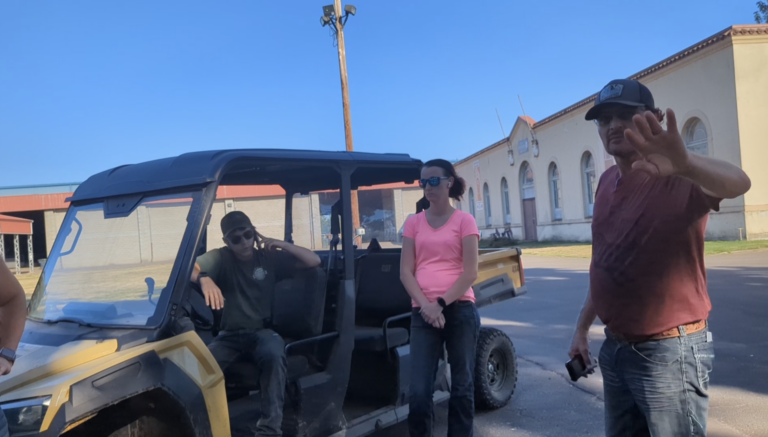
Further attention to the company came after officials became aggressive with Equestrian Media Group’s managing editor on Saturday outside its leased sale barn at the Oregon State Fairgrounds– an altercation caught on audio and video.

Shortly after the incident over the weekend, the company and several of its regular sellers and “officials” began removing past horse sale ads from social media. PNW Horse Sales also removed the past auction history from its page on the popular bidding site HiBid.

Multiple sources told NW Horse Report that they were having trouble getting the company to provide information on the sellers, despite an Oregon law that requires the company to keep and provide such records to the Oregon Department of Agriculture and buyers.

It was revealed that the auctioneer, who goes by the alias John Henry, had been charged with stealing over a dozen horses in multiple Louisiana parishes in 2018. Henry’s real name is reportedly Jonramon Hatfield Vaughns, 35, previously from Port Allen, Louisiana. Vaughns (Henry) contacted our newsroom by phone late Wednesday after being tipped off to NW Horse Report’s inquiries seeking to confirm that Vaughns and Henry were indeed the same person.

Vaughn (Henry) confirmed to NW Horse Report that the information was accurate, but said he’s always gone by John Henry the majority of his life when asked if he adopted the alias following his past criminal troubles.

The Louisiana Department of Agriculture and Forestry (LDAF) Livestock Brand Commission charged Vaughns (Henry) in September 2018 for stealing 15 horses.

According to the LDAF, the warrants stemmed from two separate complaints filed with the Livestock Brand Commission in two separate parishes (a state term used in lieu of county).

The past story was widely covered by numerous other media outlets and publications, including WAFB-CBS9, the Associated Press, The Washington Times, and TheHorse.

Vaughns (Henry) claimed that instead of receiving a conviction, a “civil compromise” was reached that involved him paying restitution to his victims, but NW Horse Report is still investigating that claim. Vaughns also said that he was working as a contractor of PNW Horse Sales, as he could not obtain his own “dealers license”.

He also stated he could only do livestock auctions. NW Horse Report was not immediately able to confirm if Vaughns’ involvement as the auctioneer, as well as an alleged seller, would have been prohibited due to his past criminal history.

Vaughns (Henry) also had a felony check fraud charge from 2018 in the State of Missouri, but it was unknown if the charge was related to equine activity or sales.

A source, who spoke on the condition of anonymity out of fear for their safety, also said that Vaughns (Henry) has already had similar issues in recent years involving acting as an agent on behalf of sellers in Washington and Oregon while reporting himself as the owner of horses to the actual auction companies.

Vaughns (Henry) was also alleged by numerous sources, as well as by countless posters on social media, to be in a relationship with the owner of 4K Ranch, Kristina Jones, the same self-admitted clerk for PNW Horse Sales.

Jones was identified as the woman whom NW Horse Report previously reported attempted to take our camera during the previous altercation with us.

However, Vaughns (Henry) said that Jones was a past girlfriend and that he was now engaged to another woman, claiming he only continues to work with Jones professionally by riding her horses.

4K Ranch was a company used by Jones to sell horses through multiple auctions, including PNW Horse Sales while she worked as the auctions clerk. NW Horse Report previously obtained records provided in a previous story showing horses being sent to the auction sale by 4K Ranch.

“I have been working my ass off to repay my past debts,” Vaughns said while going on at length about how he had been working hard to not run afoul of the law in recent years.

Vaughns also admitted that he was asked by Nowlin, not Reevs, to be the auctioneer for PNW Horse Sales.

He went on during his conversation to offer to “help [us]” in exchange for not reporting on the link between his alias, John Henry, and his identity as Vaughns.

“Before you make your post, I want you to think about something for a couple of days, okay?… Do this for me, like I said, there are ways I can help you with the other stuff you have going on.” Vaughns said.

“If you leave me out of it, I will gather information and help you– but that stays between you and me.”

NW Horse Report declined the offer citing journalistic ethics standards to Vaughns.

The Facebook page for PNW Horse Sales was deleted hours after Reevs posted its closure announcement where it placed significant blame on NW Horse Report for the closure.

“Thanks to NW Horse Report sinking its claws into myself and everyone around this sale [sic] we are sad to say that the Sept sale was our last sale,” the announcement read in part.

“All checks from the Sept 9th sale were mailed out Wed, Sept 13th, 2023. If you have any issues with checks please contact me.”

Anyone who believes they have been the victim of a crime or may have first-hand information regarding unfair trade practices involving the horse sale auction can file complaints with the Oregon Department of Agriculture or the Oregon State Police.

Reevs and the company had also questioned in a since-deleted posting if Equestrian Media Group had a reporters’ “license”, a chilling implication considering the work of journalists across the United States has always been one of the most central rights protected by the 1st Amendment to the United States Constitution.

The idea that the government could control the media through any sort of licensure would be a drastic departure from American values and the role of a free press in preserving our democracy. Fortunately, well-established case law prohibits such a practice. Such a requirement is the sort of thing seen in authoritarian governments.

Equestrian Media Group’s reporters are part of the Society of Professional Journalists and adhere to SPJ Ethics standards. SPJ is the nation’s most broad-based journalism organization, dedicated to encouraging the free practice of journalism and stimulating high standards of ethical behavior.

California man arrested for DUI while riding a horse

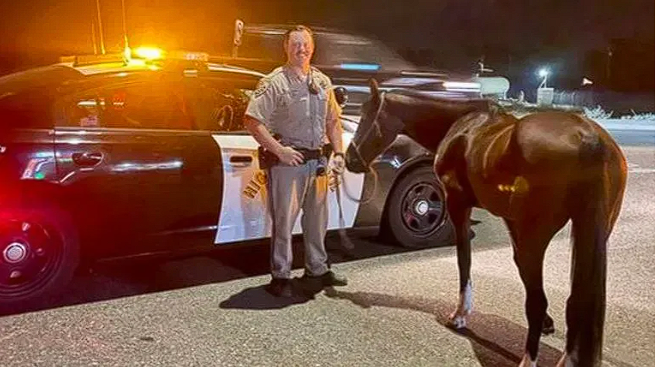
(Photo courtesy: CHP)

Merced, Calif. – A man in Merced, California was caught by California Highway Patrol officers while riding his horse and being under the influence of alcohol.

CHP stated that officers spotted the man taking his horse out for a ride with an open container.

After the man spoke with the CHP officers, it was determined that the man on horseback was under the influence of alcohol and was subsequently arrested for DUI.

CHP said it’s not worth riding– or driving– under the influence.

“It’s worth noting that, according to California Vehicle Code 21050, the rules of the road apply to those operating animals on the highway,” said CHP.

Another California man, from Santa Cruz, was arrested for public intoxication while riding his horse according to a 2019 story from the New York Post. CBS News also covered another incident from 2018, also involving a man in California.

Horse sale company removes past auction history from online site after allegations of deceiving buyers

Salem, Ore. – An Oregon horse auction company facing growing allegations of illegal auction and unfair trade practices appeared to have removed all past auction history from its online auction site pages.

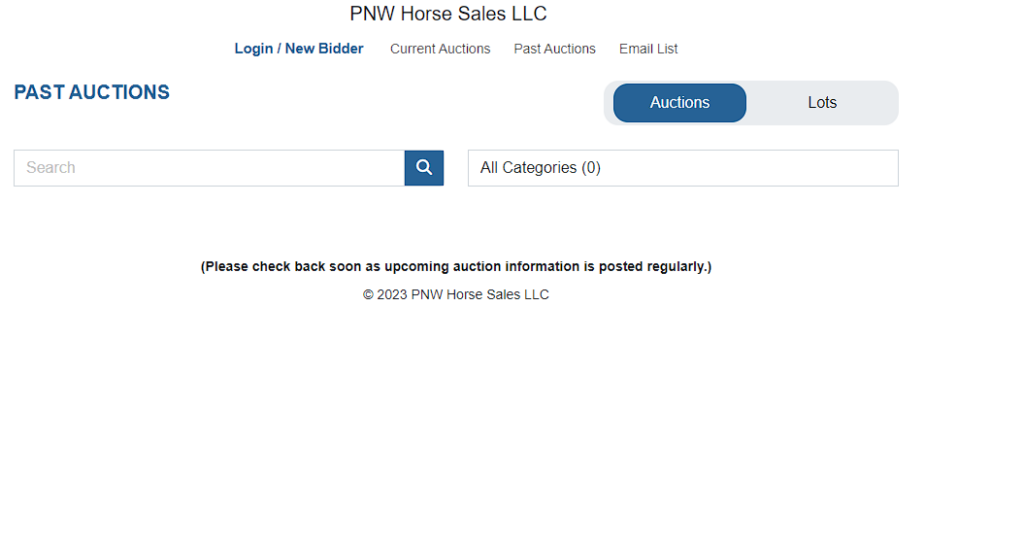
The company, PNW Horse Sales, maintained an online listing page with the popular auction site HiBid that would also show the history of all past “lots” that had been put through auction, a standard practice for most auction companies in order to assure transparency.

After initial publication, it was also discovered that ads for horses that dominated the company’s Facebook page had also been deleted.

PNW Horse Sales received increasing attention and consumers coming forward about issues over the last week after Geneva Boston– who previously was heavily involved in the company– was arrested for aggravated animal abuse in connection with a now-viral video of her aggressively whipping a horse.

The scrubbing of info is further increasing speculations of ongoing efforts by the company and affiliates to cover its tracks in light of growing allegations of numerous misdealings by the company. The allegations include concealing and then later making false public statements denying the involvement of a notorious and self-described horse “kill buyer”, Donald Nowlin.

Several sources also claimed to NW Horse Report that other sellers involved with the sale had been removing a long list of past ads for horses on social media.

Last week, NW Horse Report reported on the allegations that Nowlin was, in fact, an owner of the company despite a public statement by the company’s listed owner, Tommie Reevs, denying any such involvement in order to deceive potential buyers.

Among the other allegations against the company included company officials and sellers engaging in “shill bidding”, both in-person as well as via HiBid.

NW Horse Report received a tip early Tuesday morning that the company had allegedly scrubbed the information just days after the company’s officials had an altercation with Equestrian Media Group’s managing editor on Saturday, resulting in the questionable trespass of a journalist from the entire publically accessible fairgrounds, based only on unfounded claims of “disturbing the peace” made by Don Nowlin.

A screenshot of the current Past Auctions page for PNW Horse Sales was taken Tuesday afternoon. The company recently removed all past history from its HiBid auction page following growing allegations on social media by buyers and other critics, as well as threats against Equestrian Media Group’s managing editor.

NW Horse Report also recently obtained records on Tuesday that appear to reveal that Nowlin is also operating an illegal Washington State business called Bar 4 Ranch, which according to the documents is located at 1530 Maplegrove Rd in Sunnyside, Washington.

There were similar business names to Bar 4 Ranch, but none of them appeared to be tied to Nowlin or the Sunnyside area. That included this document showing an inspection date of September 5th showing the shipment of 7 horses to the Oregon State Fairgrounds.

However, a Washington State Livestock Brand Book did list a brand under “Bar 4 Ranch” for Don Nowlin and Hanna Keyes.

The company is not registered with the Washington State Corporations Division or the Washington Department of Revenue. Nowlin is instead the listed owner for Outwest Livestock Transportation, LLC which is listed as “dissolved”, but it was unclear if Nowlin is still operating under that company.

The use of the company name “Bar 4 Ranch” appears to allow Nowlin to conceal his involvement as the Washington State Department of Agriculture, Certificate of Veterinary Inspection (CVI), which listed Bar 4 Ranch as the owner/consignee, was issued by Dr. Kalie Mercer.

When reached for comment earlier Tuesday about the issuance of CVI’s under the bogus business Mercer said, “I’m not interested in commenting on any of this. Thank you though.”

Washington State’s Veterinarian Dr. Amber Itle, the State Veterinarian for Washington State, told NW Horse Report that veterinarians often rely on the information presented by owners and consignees about a horse when issuing a CVI.

“The veterinarians do the best they can to provide the most accurate information they are provided. We really do rely on the integrity of producers to tell the truth, it’s a legal document,” said Itle.

“Veterinans work under high integrity and are going to put the information on the document that they are provided, but I have one-hundred percent faith that veterans are doing the right thing, or trying to.”

Itle confirmed that verifying that a business name is registered when being used in lieu of an individual’s name is not a specific requirement, reaffirming that the veterinarian’s client would be the one providing false information for the legal document. Itle’s comment was made speaking generally and not specifically about Nowlin’s Bar 4 Ranch.

Veterinarians must be accredited in order to submit CVI’s.

After the weekend altercation, it was discovered that PNW Horse Sales appears to be concealing that numerous sellers were indeed also “officials” involved in the operation of the auction itself, allegedly including its auctioneer.

Another company official and seller, Kristina Jones, who owns 4K Ranch in Roseburg, made repeated advances during the Saturday altercation by attempting to take our editor’s camera and repeatedly demanding the camera’s SD card.

Jones later admitted in a since-deleted Facebook post that she was also a “clerk” for the auction, as well as claiming that our editor was being “creepy” and taking photos of their children.

Oregon State Police later explained that taking photographs in public did not require any consent and there was no expectation of privacy, including of children.

NW Horse Report will soon be releasing all of the photos taken throughout the encounter. Those records will show that any minors pictured were incidental within the photos and only pictured in a few. The majority of the photographs were of Nowlin.

We believe Jones’ since-deleted statement was simply meant to be inflammatory, if not a defense of her actions which this publication categorically believes is unacceptable, especially towards a known journalist in public.

Jones also alleged that NW Horse Report falsely reported that she did assault our editor, but our past reporting and the video from the incident are clear that it was only an attempted assault. Although, according to one legal expert and criminal law attorney, Jones’ actions may have been considered disorderly conduct under ORS 166.025, and potentially menacing under ORS 163.190.

Equestrian Media Group’s managing editor, Justin Alderman, stated, “I should be clear that the Oregon State Police troopers were nothing but professional in addressing the situation, and their role in the matter was perfectly understood. I commend the troopers.”

“They also were quick to make clear that there was nothing illegal about taking photos in a public area and there was no such expectation of privacy– a fundamental element of free press protected by our 1st Amendment,” said Alderman.

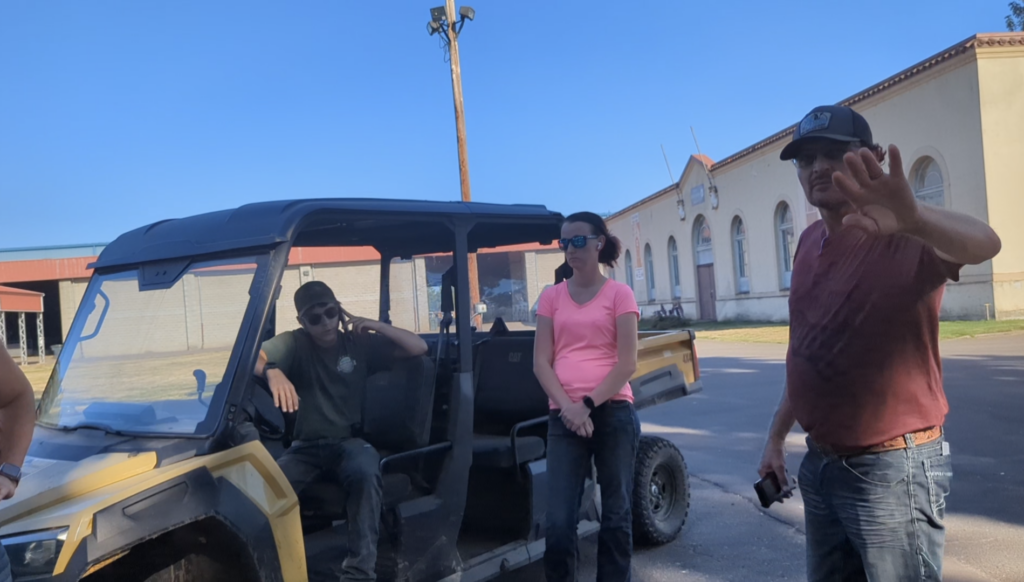
Officials with PNW Horse Sales started an aggressive altercation on September 9th with Equestrian Media Group’s managing editor. Pictured is alleged co-owner Don Nowlin (right) and listed owner Tommie Reevs (center). (Photo Credit – NW Horse Report)

Evidence and witnesses have also claimed children have been involved in working at the sale, including riding horses in the ring. Officials with Oregon’s Bureau of Labor & Industries (BOLI) confirmed on Friday that the company did not have the legal certificate required for minor workers.

According to HiBid officials who spoke to NW Horse Report, the removal of the past auction information was performed by the company, not HidBid.

“That’s at the auctioneer’s discretion,” said the official. “We wouldn’t remove anything.”

The official stated they had not yet received any consumer complaints about PNW Horse Sales, but stated the company’s account was only opened in April.

HiBid did however confirm that it still would maintain all the records from the past auctions and that all activity on the site was logged, confirming the company could not scrub such records permanently. The official went on to say they would share the information if requested by any law enforcement agency.

“If it came them (law enforcement), then yes.” said the HiBid official.

In addition to filling complaints with law enforcement, HiBid said that consumers with any complaints or concerns about any auctioneer can contact their customer support by phone at (844) 775-4774 or by emailing support@auctionflex.com

NW Horse Report is currently combing through a pile of records, including import permits, certificates of veterinary inspection, and EIA testing records. The records from the Oregon Department of Agriculture that appear to be tied to PNW Horse Sales are provided here for our readers.

It was also confirmed that certificates of veterinary inspection submitted electronically through a State-approved system do not require a separate import permit.

Anyone who believes they have been the victim of any scam or fraudulent activity at the Oregon State Fairgrounds can reach OSP by dialing *OSP or *677 if calling from a mobile phone. Otherwise, you can dial (800) 442-0776.


This is a developing story that you can count on us to keep you updated on. If you have a news tip or any information related to this story, please be sure to contact us!

PNW Horse Sales’ “officials” start aggressive altercation with Equestrian Media Group’s managing editor

A more formal story in addition to this prompt statement will be published in the coming days. Due to the sudden attention and false rumor that our editor was arrested, we wanted to ensure this statement was made.

Salem, Ore. – Our managing editor was “trespassed” from a publicly accessible area of the Oregon State Fairgrounds after formally (and politely) being asked to leave by Oregon State Police, despite claims by PNW Horse Sales “officials” that he would be arrested during an altercation.

The incident later involved an official with PNW Horse Sales attempting an assault in order to take our editor’s camera, part of which was caught on video.

We were attempting to take photos and observe in an open and transparent manner outside of any buildings that were reportedly leased to PNW Horse Sales. This was being done without approaching anyone or causing any disturbance, and audio and video recordings throughout the duration of the encounter will support this.

Our editor was promptly approached by Don Nowlin, who the company had maintained was “not involved” in the operations of the business itself. Nowlin claimed on a recording by our editor that he was “in charge” and demanded he leave the fairgrounds, which our editor argued he did not need to do, as Nowlin wasn’t willing to directly confirm he was an official with PNW Horse Sales.

Our editor attempted to de-escalate a situation that was rapidly escalated by Nowlin, leaving the area outside the reportedly leased buildings at the Oregon State Fairgrounds where there was some activity. Tommie Reevs, the listed company owner, had also attempted to de-escalate and restrain Nowlin, albeit unsuccessfully.

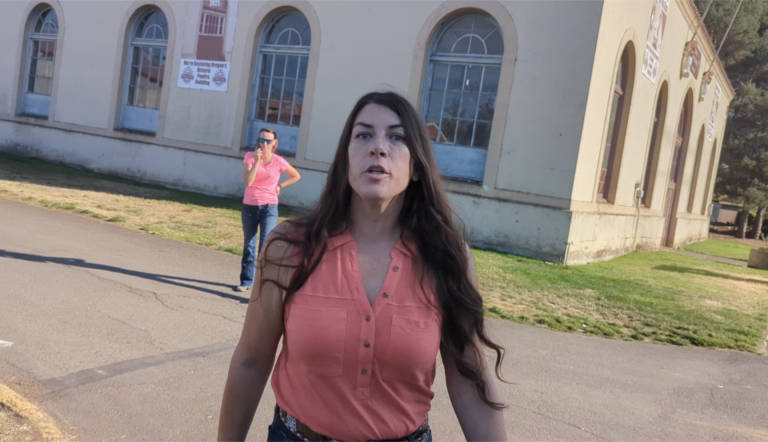
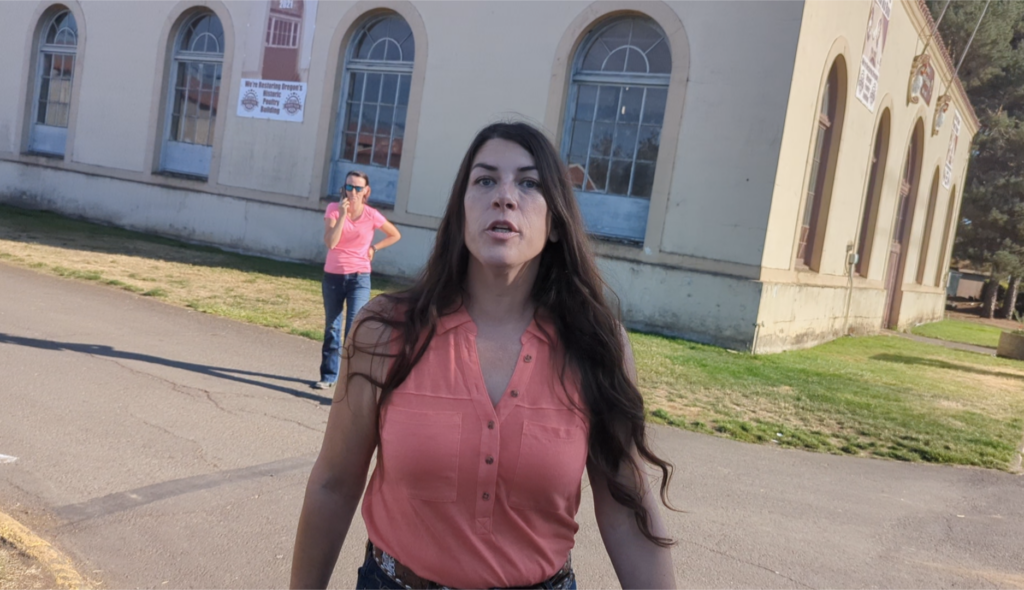
Nowlin and another unknown “official” continued to follow our editor even further away through the fairground’s publicly accessible areas and were physically close. The originally unnamed official, who was quickly identified as Kristina Jones, attempted to physically assault our editor in order to take his camera, leading to our editor recording a portion of the encounter immediately after, where Jones continued to rapidly advance on him.

Jones repeatedly demanded the “SD card” from the camera, at one time claiming he would be arrested if he did not comply.

A photo taken by our editor showing Kristina Jones, an “official” with PNW Horse Sales’ who attempted to physically assault and take a camera after claiming public photographs without consent was illegal. The person said our editor would be “arrested” if he did not comply. Jones was originally reported as someone who was a seller, but new revelations appear to show that the auction is essentially operated by the primary regular horse traders who sell at the auction. (Photo Credit – NW Horse Report)

Our editor was also not at the location engaged in any “activism”, despite the recording of numerous claims by PNW Horse Sales officials that our editor (and us) are animal rights activists.

Our managing editor, Justin Alderman stated, “I should be clear that the Oregon State Police troopers were nothing but professional in addressing the situation, and their role in the matter was perfectly understood. I commend the troopers.”

“They also were quick to make clear that there was nothing illegal about taking photos in a public area and there was no such expectation of privacy– a fundamental element of free press protected by our 1st Amendment,” said Alderman.

NW Horse Report is also starting to receive information about others being “trespassed” by the auction earlier this evening, and even more allegations about the company’s operations, including that it appears the primary sellers are all involved in also running the company’s operation, raising even more questions.

Numerous online posters were also alleging that they were specifically kicked off while making bids by the company.

A more formal story will follow in the coming days as our editor is still en route home, but due to the rapidly growing attention to this matter, we wanted to ensure our readers were aware of the situation and that our editor was indeed not arrested and thankfully not physically harmed. Significant effort and time resources were put into what was expected to be a quick task, as we had no intention of going inside the public auction.

You can read our previous story here: https://nwhorsereport.com/horse-auction-concealed-ownership-by-kill-buyer-also-allegedly-tied-to-woman-charged-in-viral-horse-abuse-video/

It is the policy of Equestrian Media Group for all of our reporters to act in a professional and respectful manner. Unfortunately, these are the types of hard situations any reporter can suddenly find themselves in within small elements of the equestrian (and other) industry that are often not accustomed to investigative reporting; resorting to bullying, intimidation, and sometimes even physical assault.